
H&C Applications and Spousal Sponsorship: Why a Single Factor Is Not the Entire Case
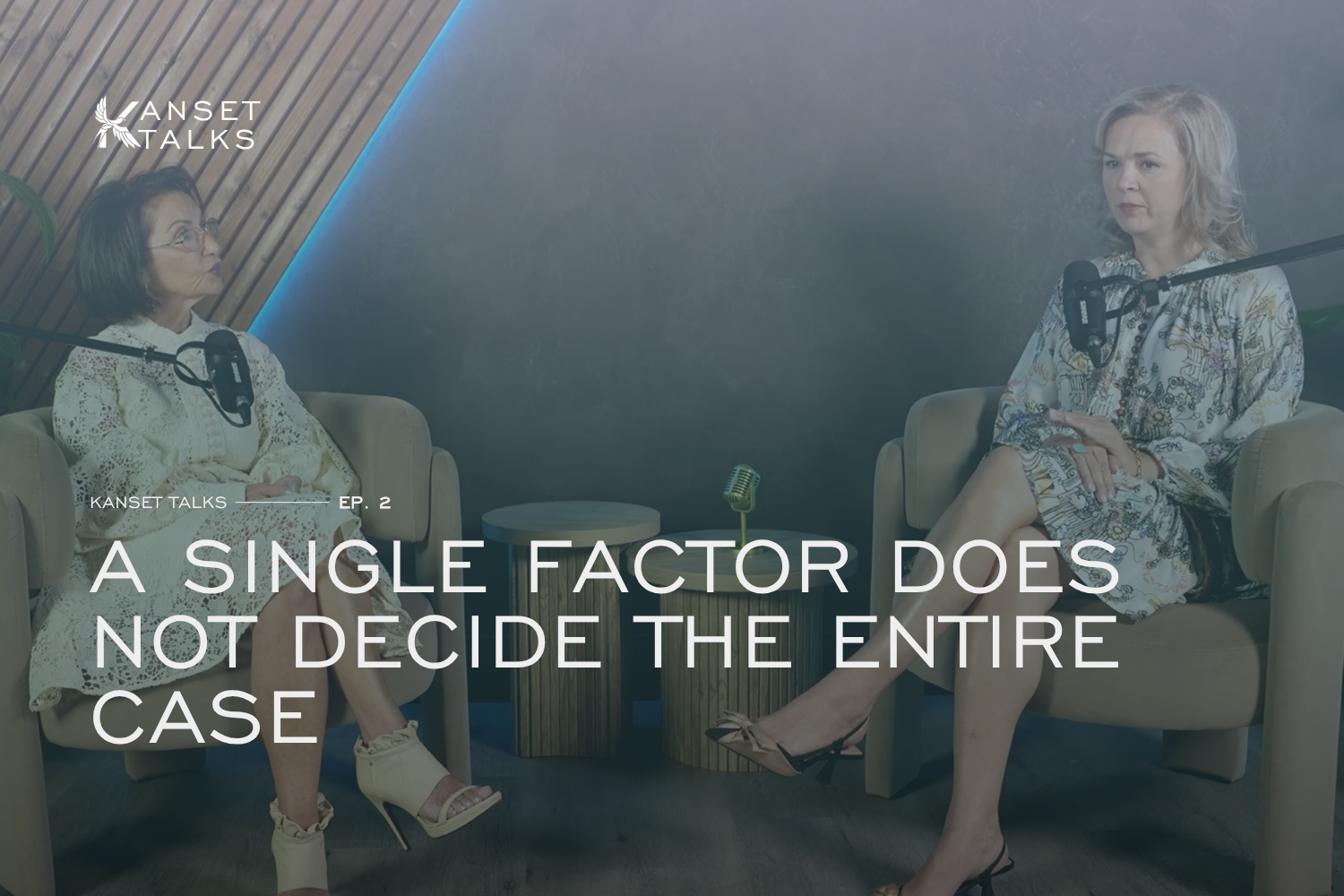
Kanset Talks, episode 2: Host Maria Guerts, a partner and licensed immigration consultant at Kanset, is joined by Mary Nirenberg, Kanset’s president, who has worked in immigration for 30 years.Maria describes a family who believed they did not qualify for anything because both spouses were over 50.
They were also working, learning English and supporting two children. Maria did not see age as the answer. She saw one factor among several that an officer would have to weigh.
Humanitarian and compassionate (H&C) applications have no age requirement, Maria explains. An officer considers the full case. One positive or negative fact cannot answer the application on its own.
Mary brings the longer view. She has watched the immigration system change, and she has seen what those changes mean in people’s lives.
When the conversation turns to spousal sponsorship, the same problem appears in a different form. Being married or common-law does not, on its own, determine how a couple should apply. Travel plans, the need for a work permit, temporary status and dependent children’s schooling can all affect that decision.
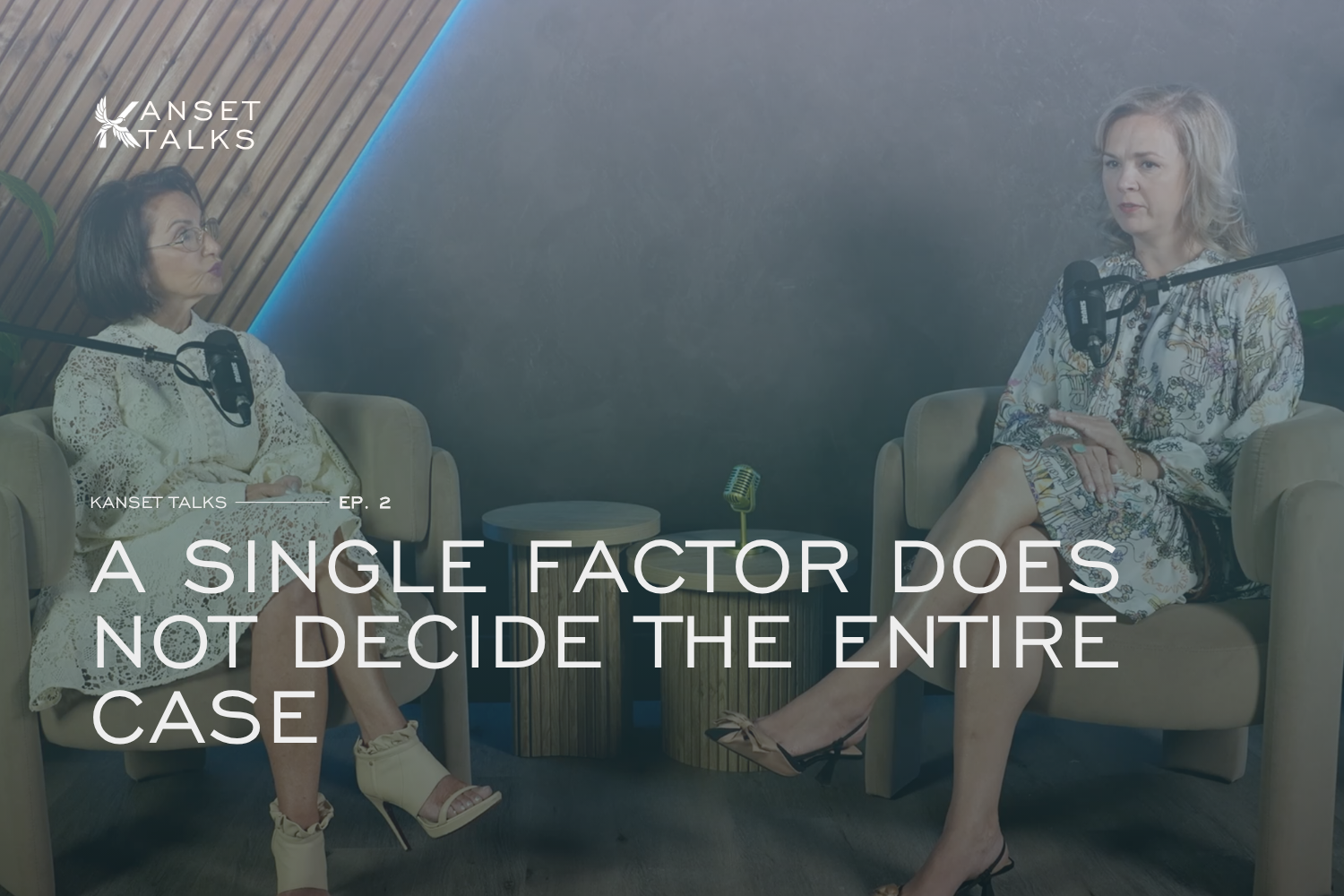
Kanset Talks episode 2, Maria Guerts and Mary Nirenberg on H&C Applications and Spousal Sponsorship applications and why a single factor Is not the entire case
Advice from other people can harden into a verdict
Maria describes people arriving at a consultation with a preconceived notion rather than a question. A friend has shared one experience. A relative has shared another. The local supermarket clerk and the hairdresser may have added their own immigration stories.
By then, the information has merged into a conclusion. Often it is a negative one: a person is too old, lacks the right document or does not fit the route they thought was available.
Another person’s experience can be useful context. It cannot show how an officer will assess a different set of facts. As Maria and Mary explained in episode 1, a standard document checklist is only a starting point. A missing document may create a problem to solve, but it does not decide the application on its own.
What officers weigh in H&C applications
Maria asks clients to picture a scale. She uses the image so often that she calls herself a broken record about it. Every relevant part of the person’s situation goes onto the scale. Some facts may support the application. Others may work against it. The officer considers their weight together rather than reading one fact in isolation.
Immigration, Refugees and Citizenship Canada says humanitarian and compassionate applications are assessed case by case. Factors may include a person’s establishment and ties in Canada, the best interests of any children affected, health considerations, family violence, separation from relatives and conditions in the country of origin.
Maria explains that an H&C application has no language requirement either. For that family, work, English study, support for two children and the years before retirement all belonged on the scale alongside age.
Mary’s response is brief: “Fifty is the new thirty.”
Her joke carries a precise point. Age cannot answer an H&C question on its own. Neither can one favourable fact, one difficult circumstance or one missing piece of evidence.
Considering the whole case does not make H&C a shortcut
A case-by-case assessment still has boundaries. IRCC describes humanitarian and compassionate consideration as an exceptional measure, not another ordinary route to permanent resident status.
Maria therefore begins by considering which other immigration routes may be available and why they do or do not fit. If an H&C application is appropriate, the evidence must explain the exemptions being requested and the circumstances that support them.
This is why collecting documents before examining the strategy can send someone in the wrong direction. The list cannot decide what the evidence needs to establish. That work begins with the person’s situation and the requirements of the route being considered.
Spousal sponsorship starts with the couple’s life
Spousal sponsorship brings different rules, but it exposes the same weakness in a ready-made answer.
Maria and Mary describe one decision as applying from inside Canada or outside Canada. In IRCC’s terms, a spouse or common-law partner may be sponsored under the Spouse or Common-Law Partner in Canada Class or the Family Class. The strategy can depend on travel plans, temporary status, the need to work, dependent children and where the couple expects to live during processing. A sponsored spouse or partner living in Canada may be eligible for an open work permit, but eligibility has its own conditions.
Marriage and common-law partnership also have different definitions and evidence requirements. Those labels matter. They still do not describe the couple’s work needs, travel plans or temporary status.
Maria’s concern is practical. Someone can spend months preparing an application from fragments of information, then discover that the chosen strategy did not account for the part of daily life that mattered most.
What a useful immigration consultation should do
Maria sometimes tells a client, “You should ask me this.” She and Mary may also encourage someone to seek a second opinion, then help that person prepare the questions to take to another consultant or lawyer.
Kanset’s consultations about humanitarian and compassionate applications are free and do not have a fixed time limit. Maria says she does not watch the clock. She uses the time to compare other immigration routes before considering whether an H&C application fits.
An online answer can explain a rule. It cannot determine how all the relevant facts apply to you.
Before spending months preparing an application around an assumption, book a consultation with Kanset Immigration Services to review your circumstances and compare the available routes.
Official sources
The general information on this page comes from the Government of Canada. To read the rules yourself:
Guide 5291, Humanitarian and Compassionate Considerations (canada.ca)
Sponsor your spouse, partner or child, complete guide (canada.ca)
Open work permit for a sponsored spouse or partner in Canada (canada.ca)
This article provides general information only and is not legal advice. Immigration rules can change, and every case turns on its own facts.
Maria describes people arriving at a consultation with a preconceived notion rather than a question. A friend has shared one experience. A relative has shared another. The local supermarket clerk and the hairdresser may have added their own immigration stories.
By then, the information has merged into a conclusion. Often it is a negative one: a person is too old, lacks the right document or does not fit the route they thought was available.
Another person’s experience can be useful context. It cannot show how an officer will assess a different set of facts. As Maria and Mary explained in episode 1, a standard document checklist is only a starting point. A missing document may create a problem to solve, but it does not decide the application on its own.